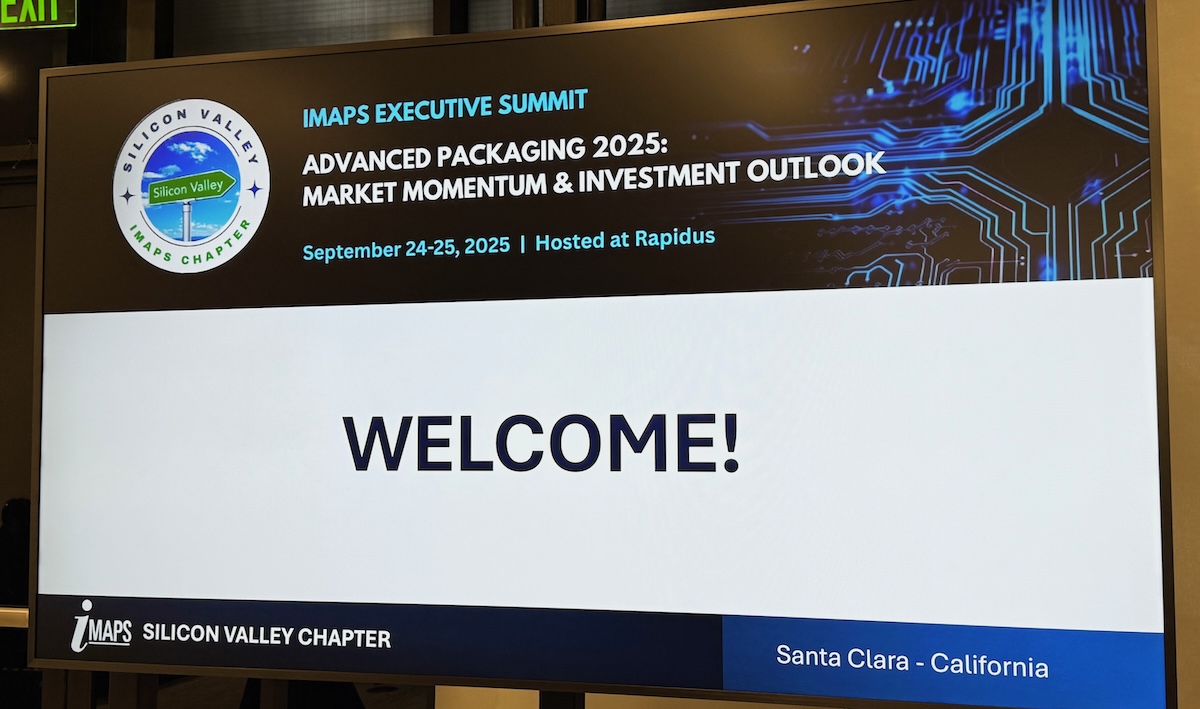
To celebrate the re-boot of Silicon Valley’s IMAPS Chapter, Chair Rozalia Beica, Rapidus, conceptualized and launched – with the help of the local committee and the IMAPS team – the first ever IMAPS Executive Summit. The theme was Advanced Packaging 2025: Market Momentum & Investment Outlook. According to Beica, what started out as a half-day program quickly grew into a 2-day summit, thanks to snowballing interest among the local chapter members who wanted to present.
In my opinion, getting Silicon Valley to recognize advanced packaging as a value-add area of semiconductor manufacturing is a long time coming. We’ve been talking about the importance of advanced packaging to solve system-level challenges – from cost to performance to power – for about 20 years. It’s about time the “silicon guys” take notice.
Scanning the room, those I recognized from the advanced packaging community were there to provide their expertise as speakers and panelists. Among them were 3D InCites members such as YES’s Rama Alapati; Deca’s Tim Olson; Adeia’s Gullian Gao; and Eelco Bergman, Saras Microdevices. Those I didn’t recognize are newcomers to the space; either fresh from the front-end, or start-ups hoping to learn if their products and services could fit in the market.
There were also several VCs, there to talk to the startups about securing funding, and also to learn more about the opportunities in the advanced packaging space. It was the same story we’ve been telling for years – but a whole new crowd ready to learn. (It reminded me how long I’ve been doing this.)
Watercooler Conversations
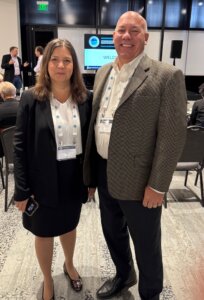
As I am not a newcomer to the benefits of advanced packaging, the most interesting tidbits of information for me came from the conversations I had with people who are always happy to share their perspectives, even if they can’t go on record with them. I was asking questions about the security of CHIPS Act funding, and the impact of $100K fees for H1-B visas.
One attendee showed me an email he received yesterday in response to a recent application for CHIPS Act Funding. The email simply said the opportunity had been withdrawn and provided a link for a different opportunity under a different department. He was not happy. After spending nearly 100K in person hours to fulfill the application requirements, he now had to decide whether it was worth going through the process again.
The mere mention of the H1-B visas announcement sent eyes rolling and hands thrown up in gestures of despair. The general consensus is it initially created chaos for any company that had employees who were out of the country at the time of the announcement. In the long term, it will negatively impact the US semiconductor industry as companies and high-tech talent choose to do business elsewhere.
On The Record
I asked Tim Olson, Deca, if he was concerned about the $100M SHIELD project the company is leading, in partnership with ASU. He reported that the first year’s funding had been dispersed. They are hoping to get the second year’s funding, but if they don’t he’s confident that the stakeholders will find a way to keep it going.
Shahin Farshchi of Lux Capital advised attendees not to count on government funds, and said that Lux doesn’t factor that into the underwriting when investing in a company.
Rapidus President, Henri Richard said in his keynote talk, “It’s good that that the U.S. Government is a shareholder in Intel Corporation. We can’t allow it to fail.”Here’s my take: It may be good for Intel. It may be good for the U.S. government. Heck, after NVIDIA’s $5 Billion investment last week, Intel’s stock went up a reported 23%. IF the U.S. sold its shares, they’ve already made a profit.
But is it a good precedent to set for other companies in exchange for their CHIPS Act allocations? I’m thinking about Micron Technology, Amkor Technology, Inc., and others.
Advanced Packaging as a Strategic Differentiator
I only attended the first day, as I was invited to moderate the panel, Market Trends – Semiconductor Packaging as a Strategic Differentiator. Joining me were Bilal Hachemi, PhD, Senior Technology & Market Analyst, Semiconductor Packaging at Yole Group; Rama Alapati, Managing Director and Partner at KCK US Inc.; Risto Puhakka, a leading authority in the semiconductor capital equipment market and manufacturing supply chain; and Farhang Yazdani, President and CEO of BroadPak Corporation. We had a vibrant conversation discussing everything from the evolution of advanced packaging, macro trends driving investment and innovation, how packaging is influencing fab strategies and roadmaps, the impact of CHIPS Acts funds, and more.
We some great questions from the audience. Someone asked about whether advanced packaging would ever be standardized. Other than panel sizes for panel-level packaging – 510 x 515 and 600 x 600, – advanced packaging standards were unlikely. That’s hard to explain to a room full of silicon guys who are used to front-end standards. But the panel agreed that there is more need than ever for application specific ICs (ICs), which require customized advanced packaging solutions.
The question that had us all scratching our heads was “How long will we need innovation in advanced packaging?” We agreed that as long as there continue to be innovations in silicon, there will be a need for innovation in advanced packaging.
Unfortunately, I forgot to record the discusson, and I still haven’t mastered the art of moderating while taking notes. So I can’t recap it in full beyond these stand-out moments. You really had to be there.

A New Kind of Company
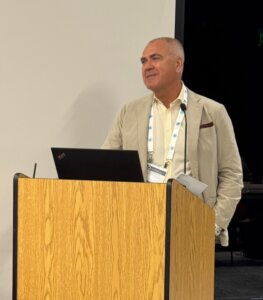
As host of the two-day event, Henri Richard, President of Rapidus Design Solutions kicked things off with a keynote that teed up Rapidus as a new kind of company ready to take on the tumultuous times the semiconductor industry is currently in – from geopolitics and high tariffs, to fragmentation of the markets, shifting technology challenges, and increasing costs with diminishing returns. He called it a “perfect storm.”
“If you’re going to succeed in this market, you’re going to have to have a different kind of company. ” he said. With plans to offer both foundry and advanced packaging services in one location in Japan, he said Rapidus is positioning itself as a new foundry player that can address demand faster, smarter, and collaboratively.
He also said Rapidus will embrace single wafer processing (SWP) as the new standard, because “Chat GPT said its better.” Apparently it told him that SWP offers better precision and process control, tighter process windows, higher yields and faster feedback loops, is better for advanced node and HI, can control chemistry.
That’s when I had an epiphany: ChatGPT does not have critical thinking skills. It uses natural language processing to analyze data, implementing both pattern recognition and contextual understanding to provide results. However, it cannot discern between information from a peer reviewed paper, or a company website. It also can’t get to anything behind a paywall. So, if you want to make sure your technology is considered the best choice, you just need better messaging than your competitor and repeat that information is as many different perspectives as possible. And hire a good SEO specialist to make sure your content ranks high.
But I digress.
Advice from the VCs

The most interesting information of the first day came from the VCs. Dan Armbrust, Silicon Catalyst, and Shahin Farshchi shared insights on what is driving investment in startups, where the opportunities are, and what they’re looking for.
Armbrust says startups are crucial to innovation, particularly now in semiconductor manufacturing and advanced packaging. System companies such as Apple, Google, Amazon, and others are becoming silicon houses, developing custom chips for their own needs.
Here’s where startups face product market fit challenges, he said. They must be alternatives to what the system companies can do themselves. Armbrust stressed that innovation – particularly in advanced packaging – is needed, and quickly.
But if you’re looking to fund an equipment start up, it may not be your lucky day. It’s hard to raise money – you must be better than the well-established OEMs and be well received globally. “There’s no way they’ll (manufacturers) accept buying equipment from a start-up,” he said.
For his part, Farschi said historically, semiconductor packaging was the least sexy space, but investors are realizing this is where the bottlenecks are. “The question is, how do we play in the advanced packaging space, not whether it’s interesting,” he said.
Farschi says he’s driven by great founding teams who are solving hard problems. He seeks out talent who has the foresight to see a great opportunity, build a team, and tell a great story. “It’s not about the money, it’s about the relationships,” he said. “It’s about the ecosystem and nurturing relationships.”
Isn’t it always?