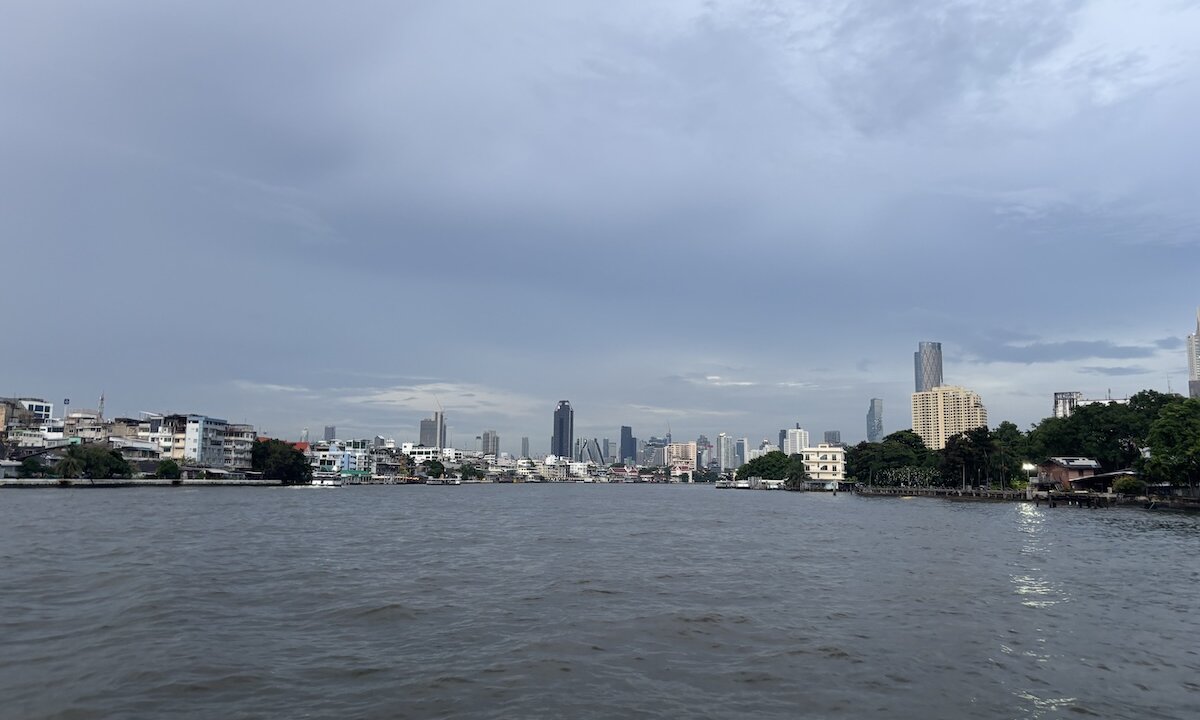
After years of transformation, Southeast Asia is on track to become a hotspot for semiconductor manufacturing. In 2024, I touched on the Bac Ninh province in Vietnam, highlighting a few of the reasons why global industry giants like Amkor, Nvidia, and Samsung have chosen to establish a presence there. This year, I’m shining a light on Thailand.
Recently, I was lucky enough to spend a full week in the country. As a guest of the Thailand Board of Investment (BOI) office, I toured Bangkok and its surrounding cities to understand how its industry is being shaped within today’s unpredictable world. To cement its place in the global electronics supply chain, Thailand aims to solidify its leadership in printed circuit boards (PCBs) and power electronics.
During my visit, I learned about the steps the country is taking to realize this – like bolstering its infrastructure, prioritizing renewable energy, and creating its future workforce. These initiatives are being cultivated through unified action across Thailand’s governmental agencies, private sector companies, and educational institutions.
A Gateway to Southeast Asia and Beyond
On May 13, I went to the brand new BOI office. It was so new, our meeting was the first to ever take place there.
Under the freshly-installed lights, Tanita Sirisup, senior executive investment advisor at the BOI, explained that the agency is targeting $15.4 million in new semiconductor investments by 2029.
There are several ways Thailand is attracting investments, but one of its most notable is through steep corporate income tax exemptions. At the BOI’s top investment tier, certain companies in upstream semiconductor sectors like wafer production or IC design, may be eligible for exemption for more than 13 years. Companies offering products or services that support these efforts are also eligible for exemptions, although for shorter periods of time.
As I sipped a cup of coffee, Sirisup also highlighted Thailand’s strategic position for connecting Southeast Asia with China. Not only is Thailand located near prominent global shipping routes, but it’s also surrounded by key trading partners like Vietnam, Laos, and Cambodia.
Fortunately, the country’s investment and location perks are being noticed. The ASEAN Briefing reported that foreign direct investment into Thailand rose to $33 billion in 2024 – a significant 35% increase over the previous year. In addition, Thailand’s exports grew at a CAGR of 4.4% between 2019 and 2023, partially due to its growing leadership in electronics manufacturing.
I learned that to further strengthen its place in the supply chain, the country knows it must invest in infrastructure. So far, Thailand’s most substantial effort has been its phase three expansion of Laem Chabang – its largest port. Once the expansion is completed in 2027, Laem Chabang will be able to handle 18 million TEUs of cargo each year, placing it among the top 10 busiest ports in the world.

The effort to expand Laem Chabang is also complemented by Thailand’s upcoming 2026 land bridge project that will connect the Gulf of Thailand on the east, with the Andaman Sea on the west to further promote trade.
Trade Strategies Amidst Trump Tariffs
Thailand’s additional transport capabilities are expected to be beneficial as the country continues to navigate reciprocal tariffs with the U.S.
“We can turn crises into opportunity in Thailand, but we must be ready to upgrade and transform ourselves,” said Pichai Chunhavajira, deputy prime minister, during his address at SUBCON Thailand on May 14.
He later explained that Thailand plans to boost exports in the hopes of reaching a “win/win situation” with the country’s current administration. Thailand’s end goal is to maintain a positive relationship with the U.S. – its largest export market.
Since SUBCON, it looks like Thailand has stuck to its strategy. As of July 17, Thailand is planning to offer the elimination of duties on up to 90% of American products. By doing so, the country hopes Trump’s reciprocal tariffs will drop from the current 36%, down to 18-20%.
During my visit, I asked several company leaders how Thai businesses were moving forward amidst uncertain relations with the U.S. Wipapan Manonom, senior manager at WHA Group – an industrial park in Thailand’s Eastern Economic Corridor (EEC) – shared that Trump tariffs were not impacting the company’s contracts. WHA Group supports manufacturing for companies like Samsung, 3M, and more.
But while the general responses were positive when I visited back in May, things may be changing as the Trump administration continues to revamp its tariff policies. On July 21, the Bangkok Post reported that Thailand can’t compete with Vietnam’s offer that allows the U.S. to import goods without tariffs. Nation Thailand also highlighted growing concerns that Chinese and Japanese companies will relocate their production to countries with more favorable tariff arrangements.
If this were to happen, it could weaken the EEC – one of Thailand’s biggest and most crucial manufacturing areas.
In recent interviews with U.S. reporters, Chunhavajira reinforced that while Thailand can’t offer 0% tariffs on everything, it can on a “substantial number of items.”
In the meantime, some larger electronics companies have compensated by exporting more within Europe and Asia. However, this arrangement isn’t necessarily ideal. Meechai Chartatpattanawong, general manager at Kimball Electronics, noted that moving products is difficult – especially for medical devices that require multiple levels of validation. For now, the company is reducing unnecessary routes through the U.S. to avoid tariffs when possible.
Renewable Energy for the Next Generation
Despite challenges, Thailand is moving forward with its plans. In addition to infrastructure investments and earnest efforts to negotiate tariffs, the country also has its sights on securing renewable energy for its manufacturing operations.
In 2012, Thailand became one of Asia’s first countries to encourage investments in alternative energy. According to the Ministry of Natural Resources and Environment, it hopes to reach carbon neutrality by 2025 and net-zero greenhouse gas emissions by 2065.
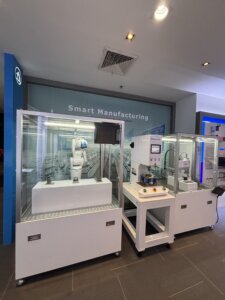
Delta Electronics – the largest electronics manufacturer on the Thai Stock Exchange – has already begun working toward this aspiration. The company built a net-zero container showroom at its Amata City Chonburi location, with solutions for electric vehicle charging, indoor air quality, building automation, and more. The purpose of the container is to demonstrate that net-zero emissions are within reach.

“We can’t take small sustainability steps,” urged KK Chong, Delta’s head of marcom and sustainable development. “If ESG isn’t top-down, then it’s greenwashing.”
Although I didn’t get to see the showroom for myself, the Delta facility I did visit was LEED Gold certified. This signifies that a building has been deliberately designed to minimize its environmental impact.
To get closer to reaching its energy goals, Thailand launched its Utility Green Tariff (UGT) this past January that supports the use of renewable energy across the country. The tariff allows certain customers to purchase solar, wind, and hydropower energy from utility-scale projects, according to the UGT website.
Backed by government support, Kimball Electronics is also beginning the next phase of its ESG initiative. Chartatpattanawong highlighted that the company is powering 20% of its operations through energy from solar panels, and it’s now working on reaching one-third.
Semiconductor Industry Workforce Development
Leading in power electronics and PCB assembly also requires a strong network of semiconductor talent. While workforce development is a well-documented challenge across the globe, the country is taking the necessary steps to mitigate it.
To learn more, I visited King Monkut’s Institute of Technology Ladkrabang (KMITL) – the home of the country’s first semiconductor R&D center. Its vision is to become a leading hub for semiconductor innovation, in alignment with Thailand’s national goals to bolster the EEC.
Currently, the university supports certain aspects of IC design, wafer fabrication, packaging and testing, and EMS. These programs are further strengthened through partnerships with leading semiconductor companies. Partner companies also help design curriculum to ensure graduates have the skills necessary for employment.
So far, KMITL is one of four Thai labs for semiconductor training funded through the Ministry of Higher Education governmental agency. Between 2025 and 2030, KMITL expects to produce 86,000 engineers and scientists.
Although there’s extensive government interest in supporting semiconductor labs, the labor and cost associated with running them can be substantial. To help address these challenges, the Thai Microelectronics Center (TMEC), a sensor-focused foundry also supported by the government, shares resources with Thai universities.
The center works as a training facility for masters and Ph.D. level students, while providing customized MEMS and sensor solutions to government bodies, academic institutions, and private sector companies. Wutthinan Jeamsaksiri, principal researcher at TMEC, explained that students usually stay for 2 to 5 years to gain practical knowledge before moving on to work elsewhere.
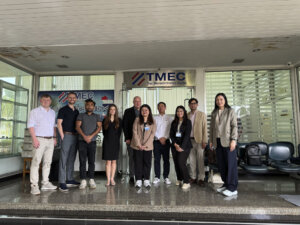
He also noted that TMEC needs around 100-150 more students working at its site, citing an “obvious” need for human resources and continued automation. Recruiting students, he said, is primarily done through word-of-mouth and social media campaigns.
“The key with students is to make sure they see the future with semiconductors,” said Jeamsaksiri.
In the meantime, some companies have begun to address shortages through automation. HANA Semiconductor for example, one of Thailand’s leading semiconductor companies, is working to use optical inspection technology instead of humans for certain processes.
Final Thoughts
Because of how global the semiconductor industry is, I was not surprised to learn that many of the challenges facing Thailand’s semiconductor industry are also present here in the U.S.
However, I think Thailand’s biggest advantage is its status as a neutral, conflict-free nation. As countries look to diversify their supply chains away from the U.S. and China, Thailand is working to seize the opportunity of becoming a key manufacturing destination free from geopolitical instability.
Right now has become a pivotal time for its manufacturing sector as a whole. Although Thailand has been making consistent progress toward its industrial development, reciprocal tariffs could be turning into a more serious roadblock than initially anticipated. During my time there, the general consensus seemed to be that everyone was in “wait and see” mode. They hoped the U.S. would reach a deal with Thailand that allowed their industry to continue thriving.
Nevertheless, Thailand is successfully taking unified action across its governmental agencies, companies, and educational institutions. This will be essential for propelling its industry forward, and for reaching its renewable energy and workforce development goals.
With all things considered, I think Thailand will become a leading nation for ushering in a new era of semiconductor innovation. I’m excited to see the growth of its industry unfold over time.