
Discover the key challenges in semiconductor capital equipment logistics—and how to build a proactive, flexible, and future-ready supply chain that prioritises safety, security, and minimal handling
Interview with Barry O’Dowd, Senior Vice President, Global Head of Business Development for Semiconductors
Q: What are the main logistics challenges when moving fab equipment?
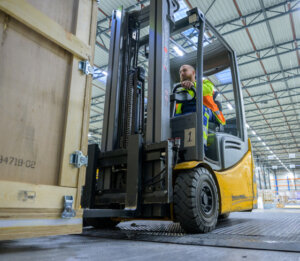 A: Every move is complex. The equipment is oversized, precision-built, and extremely delicate. The biggest challenges are route optimisation, securing regulatory compliance across borders, and mitigating risks like shock, vibration, and environmental exposure. Both front-end and back-end tools require absolute precision at every step—there’s no margin for error.
Q: What’s one mistake semiconductor companies often make when planning a cargo’s journey?
A: Many underestimate the complexity of moving these tools. They focus on manufacturing precision but don’t always realise that poor logistics can compromise equipment performance or, worse, delay fab readiness. Logistics needs to be treated as a strategic part of the production chain.
Transporting high-value semiconductor manufacturing tools safely demands a strong risk mitigation strategy—but how do you achieve that? In this interview, Barry O’Dowd answers key questions about managing capital equipment supply chain risks, reducing threats, and the vital role of real-time data and digital tools in protecting critical assets.
Q: Why is resilience so critical in the capital equipment supply chain?
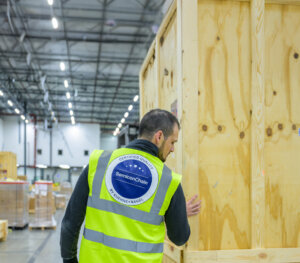 A: This type of logistics is unlike any other. We’re talking about high-value, highly sensitive machinery essential to chip production. A resilient supply chain isn’t just a nice-to-have; it’s the backbone that prevents costly delays, protects fragile assets, and keeps fabs running smoothly, even when the unexpected hits.
Q: How does digital risk management technology enhance equipment logistics?
A: Digital tools have been game-changers. We use systems like Kuehne+Nagel’s Risk Mitigator and Checklist app to gain end-to-end visibility, perform detailed risk assessments, and track shipments in real time. This proactive approach helps us catch potential issues early before they turn into costly problems.
Q: What exactly does your lane risk assessment tool do for semiconductor shipments?
A: It analyzes every route, flagging risks from extreme weather and resilience of logistics infrastructure to political instability, and assigns a risk score to each leg of the journey. With that data, we tailor transport plans to avoid pitfalls, ensuring that these critical shipments arrive safely and on schedule.
Q: What’s the benefit of using dedicated air charters?

A: Controlled capacity or charter is the most secure option for time-sensitive, high-value equipment. You can select the most appropriate airports, with direct flights and minimal handling, reducing transit time and the risk of damage. For critical fabs, that’s a level of control and speed that standard airfreight can’t match.
Q: How important is real-time data?
A: Absolutely critical. It allows us to react instantly if something changes mid-journey, whether it’s a delay, temperature alert, or customs holdup. That visibility ensures we maintain full control and protect our customers’ assets at every milestone.
Q. How do you coordinate with so many stakeholders across the journey?
A: The key is keeping all stakeholders informed at all times. We use integrated platforms to keep everyone—OEMs, carriers, and warehouse teams—on the same page with full visibility. Clear SOPs and tight communication ensure seamless handoffs, even in high-pressure situations.
Q: How does early risk mitigation help reach sustainability goals?
A: Sustainability is planned from the start. By optimising routes, selecting low-emission carriers, and digitising processes, we reduce both environmental impact and operational risk. This proactive mindset ensures risks are eliminated, not managed at the last minute.
Q: What’s your top advice for semiconductor companies to future-proof their supply chain?
A: Build partnerships with logistics providers who understand semiconductor equipment, not just general freight. Invest in digital tools that offer full transparency and risk management. And always have contingency plans. The industry moves fast, and agility is key to staying competitive.

With disruptions, geopolitical shifts, evolving policies, and environmental risks now common, it’s essential to work with a logistics partner that minimises risks before the cargo’s journey begins by using advanced technology and real-time data.