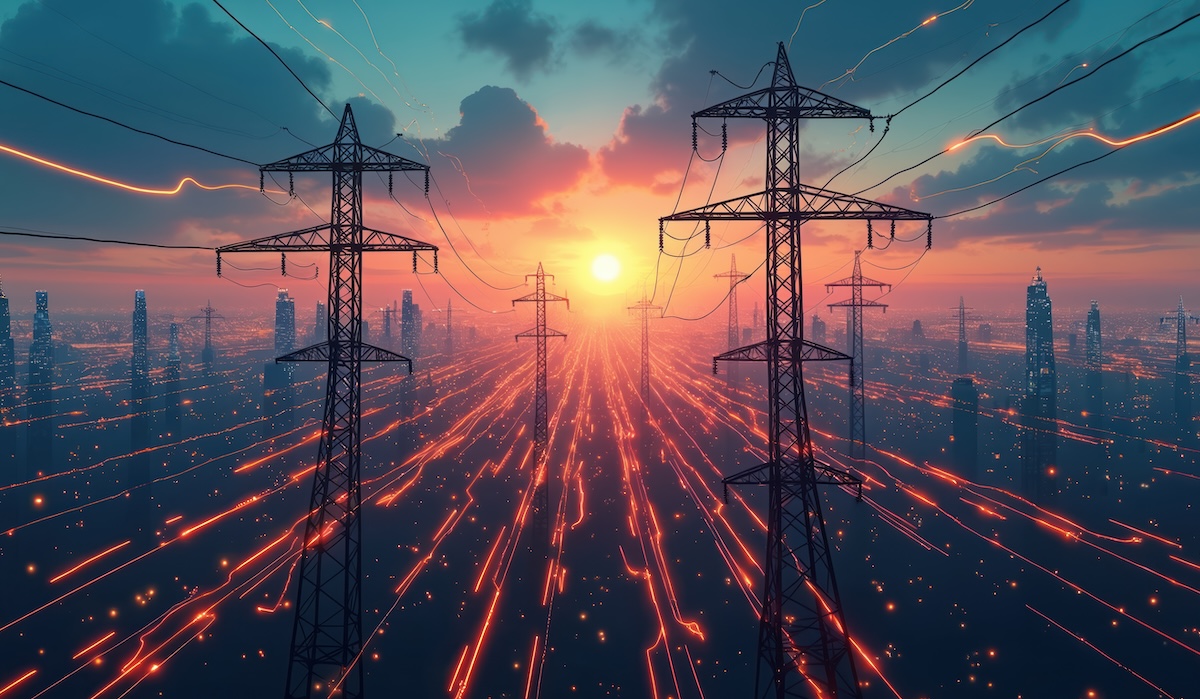
The “Great Big Beautiful Bill” just passed by the U.S. Congress is highlighting the critical nature of the electricity supply in the United States. Unfortunately, renewables are getting the short end of the stick, but nuclear power is getting more support as a viable low-carbon source.
With the rapid deployment of AI and data center power needed to run AI models and applications, the growth of electrical power generation sources is critical. Even more critical is the viability of the grid to manage power from where it is generated to where it is needed.
I attended a keynote presented by Richard Smalley —1996 Nobel Prize Winner in Chemistry — early in my career as an analyst, where he pointed out that it was possible to use solar power to generate all of the power needed to run the United States economy with several large installations in the Southwest. The real challenge was then the distribution of that power across the grid to the rest of the United States.
Unfortunately, in the 20-plus years that have passed since I heard the talk, the modernization of the grid has not been a priority, and with the revision of the inflation reduction act taking place in Congress, the federal monies that had been targeted for national grid improvement will likely go elsewhere, thus placing national grid development into the hands of the regional power companies at a time when building a national grid infrastructure is critical to both the buildout of carbon-free consumer power and hyperscale data centers.
Applied Materials recently released a white paper titled Sustainable Energy Abundance for AI. The focus was on creating a decarbonized grid and how AI and semiconductors could assist in improving power generation and distribution. The authors discuss that a truly resilient grid needs to blend three components. 1) Generation scale-out 2) Transmission infrastructure modernization 3) Smart distribution.
AI and Hyperscale data centers consume massive amounts of power. It is estimated that by 2030 they will consume 10% of the power generated. They are also being built rapidly to support the scale-up of AI. The CapEx of Alphabet, Amazon, Meta, and Microsoft to build data centers tops $300 billion in 2024 and 2025. One of their key challenges for data centers is finding carbon-free power that can be delivered reliably 24×7, 365 days a year. Due to many datacenter companies focusing on net-zero, data centers have been a key driver of renewables, and now are helping to drive other carbon-free sources such as Geothermal and Nuclear.
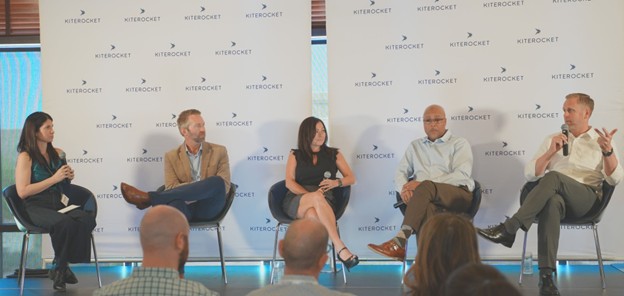
Adding some insight into how data centers are being located in the future and how they will be powered, and their impact on the grid, is a panel discussion moderated by Jessica Fishman, Renewables Energy Director at Kiterocket. The panel was held in conjunction with Clean Power 2025 and was co-sponsored by Suncast Media and Nextracker. The Panel was titled The Data Biz Is Booming, Can Renewables Keep Up?
The panelists were Ryan Abbott, President, Southwest Region, Clayco Design & Engineering, Doug Banty, CEO, MGM Transformers, Bryan K. Darby, VP of Strategic Technology Initiatives, QTS Data Centers, Patricia Stamos Levya, Senior Manager, Sustainability, Equinix.
The white paper and the panel had some similar themes, with the panel providing a bit deeper insight into how data centers are evolving and their impact on power generation.
The white paper suggested that data centers and bitcoin miners try to locate as close to renewable energy as possible. The panel expanded significantly on that topic.

The decision of where to locate data centers has evolved. Whereas, 5-10 years ago, a datacenter might have been located in a business park, and taken up part of or potentially one building on the site, data centers now are taking up entire campuses. This is the major factor in their search for power. More recently, data centers have been building along transmission lines where they can have direct access to power. In these locations, the data centers are buying power directly from the utilities and, as a result, are supporting grid development through their purchases. However, there is a significant change in the works in how data can be transmitted that will have an impact on where data centers are located and how they purchase power.
With the growth of Starlink and other satellite data providers, it is now possible to place data centers where power is generated. This allows data centers to be built in locations that would not have been considered before. Data centers can be located near geothermal generation facilities or co-located with a solar panel facility. This can also add some additional responsibilities for the data center companies as they may need to build a town adjacent to the data center and power power-generating facility. Locating where the power is generated can help to reduce grid stress, as the power does not need to travel long distances.
The panel pointed out that in building data centers next to a power source, they could be purchasing that power in a behind-the-meter agreement, which means that the power generated does not go out onto the grid.
While the panel or the white paper did not address this, the Federal Energy Regulatory Commission scuttled an Amazon deal due to concerns over grid development. So, it will be interesting to see how direct connect behind the meter installations work out in the future. It’s more likely these deals or power sources will be power purchase agreements or be owned by the data centers.
Since data centers need to operate 24×7, 365 days a year, they need to have backup power. This can come in many forms, depending on local regulations. Battery backup, fuel cell, natural gas cogeneration, diesel generators, or a combination of power sources. These sources are typically behind the meter and dedicated to the data center. The panelists mentioned that if possible, clean backup energy would be sourced, but in some cases, natural gas was the best solution for that specific location.
The panel commented that for the proliferation of data centers to continue at the current pace, all types of power will be needed. Fossil fuel, nuclear, geothermal, hydroelectric, and renewables. Renewables are the only source that has the ability to keep up with the rapid transformation, so the current legislative actions might slow the development of data centers and AI. To support the rapid demand for power growth, the grid will be undergoing its most significant transformation since the New Era deal in 1933. For data centers to achieve the growth they have planned, power providers, grid development, and the government will be crucial to their success.